

Savinelli Pipes: Italian History, Craftsmanship, and Distinctive Character
A well-made tobacco pipe combines practical engineering with personal style. Savinelli has spent generations developing that balance, producing Italian briar pipes recognized for their craftsmanship, variety, and distinctive designs.
A Family Story Beginning in Milan
The Savinelli story began in 1876, when Achille Savinelli Sr. opened a shop dedicated to smoking articles at Via Orefici 2, near Milan’s Piazza Duomo. The shop became a gathering place where pipe enthusiasts could exchange opinions and experiences.
Achille Sr. also began designing pipes, which were produced by craftspeople in the Varese region of northern Italy. His son Carlo later managed the store for more than 50 years, continuing the family’s relationship with its customers.
The next major chapter began after World War II. Achille Savinelli Jr. believed Italy should produce exceptional pipes of its own, especially because the country had access to excellent briar. In 1948, he opened the Savinelli factory and workshop near Varese. The company’s pipes subsequently developed an international reputation while the business remained connected to the Savinelli family.
Why Briar Is Important
Most Savinelli pipes are made from briar, the dense root burl of the Mediterranean tree heath. Briar became the preferred material for quality pipes because it is naturally resistant to heat, reasonably lightweight, and capable of revealing attractive grain patterns when carefully shaped and finished.
The quality of the briar is only the beginning. Its drying, drilling, shaping, finishing, and internal engineering all influence how the completed pipe looks, feels, and performs.
What Makes Savinelli Pipes Special?
One of Savinelli’s strengths is its ability to combine recognizable Italian styling with practical everyday use. Its catalog includes traditional shapes, more expressive interpretations, and finishes ranging from smooth polished grain to sandblasted and rusticated surfaces.
- Italian design: Savinelli often gives familiar pipe shapes a more expressive Italian character.
- Extensive selection: The company offers numerous shapes, finishes, sizes, and price levels.
- Briar craftsmanship: The natural grain and characteristics of the wood help determine how each pipe is shaped and finished.
- Functional engineering: Airway alignment, chamber proportions, stem design, weight, and balance are practical considerations—not merely decorative details.
- Distinctive collections: Its different series range from traditional and understated to colorful and contemporary.
Some Savinelli models also accommodate the company’s balsa filtering system. The insert is designed to absorb moisture while maintaining airflow. Filter compatibility varies by model, and whether to use one remains a matter of personal preference.
The Vigna 642: An Example of Savinelli Creativity
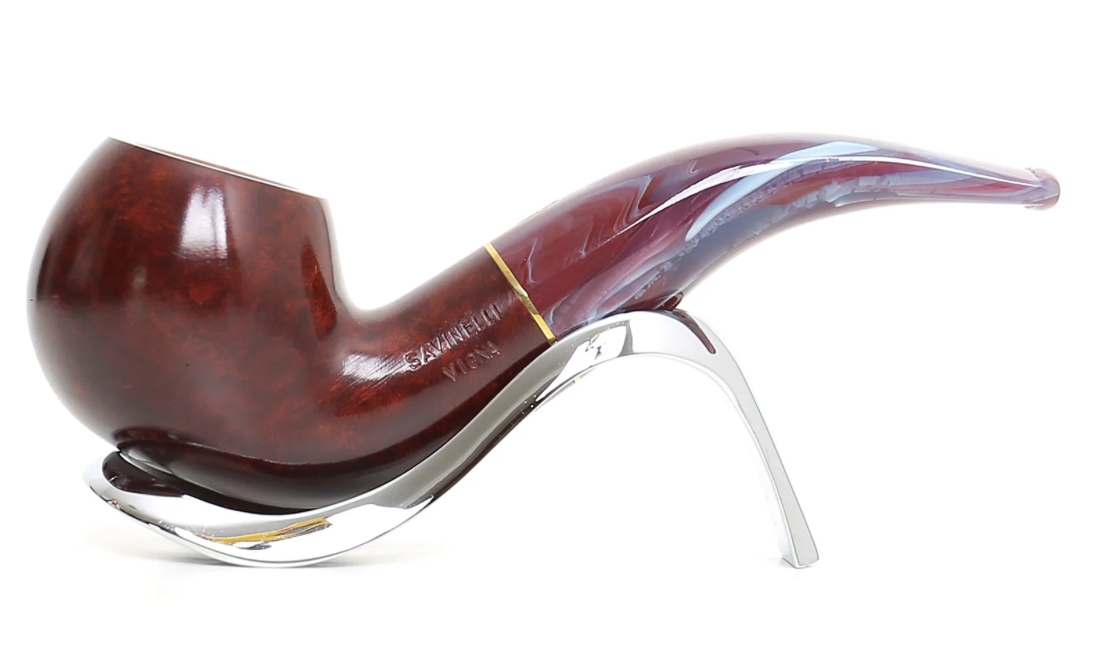
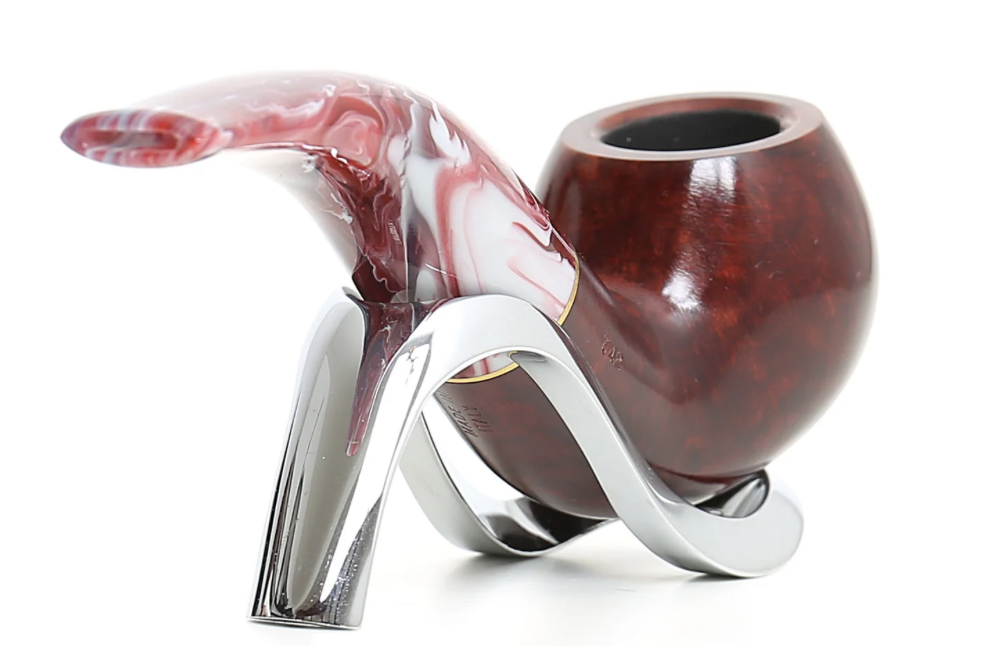
The Savinelli Vigna 642 demonstrates what the company can achieve when it combines an established pipe shape with expressive Italian styling.
“Vigna” means “vineyard” in Italian. The series draws its visual inspiration from Italian red wine, using a deep burgundy finish and a colorful acrylic stem with shades ranging from red and burgundy to dark purple. A narrow gold-colored band adds a refined finishing detail.
The 642 is a strongly curved Bent Apple. Its rounded bowl, substantial cylindrical shank, and dramatically bent stem create a recognizable silhouette. According to Savinelli, the pronounced bend also helps the pipe feel lighter and more comfortable in the mouth.
The smooth burgundy briar and individually patterned acrylic stem make the pipe especially distinctive. Because the stem material is prepared in separate handcrafted supplies, the precise pattern can vary from one example to another while retaining the collection’s established colors.
The Vigna 642 does not represent every Savinelli pipe. Instead, it illustrates the company’s broader ability to take a practical smoking instrument and give it a strong visual identity.
Choosing the Right Savinelli Pipe
The most expensive pipe is not automatically the best choice for every person. Shape, bowl dimensions, weight, stem style, finish, and how the pipe feels in the hand are all important.
A smooth finish emphasizes the natural grain of the briar. A sandblasted or rusticated finish provides more texture and may feel more secure in the hand. Bent pipes can offer comfortable balance, while straight models are generally simpler to clean.
The right pipe is ultimately one that feels comfortable, suits its owner’s preferred style, and can be maintained properly.
Caring for a Briar Pipe
A quality pipe can provide years of service when treated carefully. Allowing it to cool between uses, passing a pipe cleaner through the stem and airway, and avoiding excessive heat can help preserve it.
The chamber should develop only a thin, even protective layer rather than an excessively thick buildup. The stem and airway should be kept clear, and the pipe should be stored where it can dry properly between uses.
A Lasting Italian Pipe-Making Tradition
Savinelli’s appeal comes from more than its age. The company has remained relevant because it offers a recognizable combination of Italian design, briar craftsmanship, functional engineering, and extensive choice.
From a practical everyday pipe to an expressive design such as the Vigna 642, Savinelli gives adult pipe enthusiasts an opportunity to own part of a family tradition that began in Milan in 1876.
This article is intended for adults 21 and over. Tobacco contains nicotine, an addictive chemical.